


 info@due-all.com
 Open 24/7

Commercial Swamp Cooler Repair & Maintenance in the East Valley
Swamp coolers still do real work across the East Valley: warehouse floors, manufacturing buildings, open workshops, dock areas and covered patios where refrigerating that much air would cost a fortune. They also get treated as disposable equipment, which is why so many limp through a summer at half output. Due-All repairs and maintains commercial evaporative coolers as scheduled work, not as a favor squeezed between air conditioning calls. Pads and media, pumps, water distribution, motors and belts, ductwork and dampers, plus the spring startup and fall shutdown that decide whether the unit sees another season.
Call Now: (480) 988-0070

Serving the East Valley since 1989. BBB A+ accredited since 2001. ROC #140358, licensed, bonded and insured.
Request a Swamp Cooler Service Visit
Tell us how many coolers you have and where they sit, and we will come look at them before we put a number on anything.

Every Part of a Swamp Cooler That Fails, and What We Do About It
An evaporative cooler is a simple machine, which is exactly why it gets neglected. Water runs over pads, a blower pulls outside air through them, evaporation drops the temperature of that air, and the blower pushes it into the building. No refrigerant, no compressor, no gauge set. So when it stops cooling well, nobody gets a fault code, they get a warm building and a shrug. A real swamp cooler service is a physical walk through of water, air and the moving parts in between. Here is the list we work from.
Pads and Media: The pads are where the cooling happens, and they are consumable. Aspen pads are the loose fibre style in lighter units. Rigid media is the thick honeycomb block in most commercial coolers, which lasts longer but costs more, so it deserves cleaning rather than running to failure. Either way, once the material packs with mineral and dust it cools less, passes less air and starts holding odour. We check thickness, saturation across the whole face, and whether the frames still seal so air cannot bypass the pad entirely.
Sump, Float Valve, Pump and Water Distribution: The sump is the reservoir in the bottom of the cabinet, and the float valve holds its level the way a toilet tank does. Set too low, the pump starves the pads. Set too high, the cooler overflows onto a roof. The pump pushes water up to distribution headers and out through spider lines, the small tubes that spread water along the top of each pad. Those block with mineral and sludge, and one blocked line means a dry stripe of pad doing no work. We clean the sump, clear the lines, verify the float and confirm even flow.
The Bleed Off Line, and Why Arizona Water Decides Everything: A cooler evaporates pure water and leaves the minerals behind, so the sump gets harder the longer it runs, and our water is hard to begin with. Left alone, that concentrate becomes scale on the pads, sludge in the sump, blocked spider lines and a pump that grinds itself out early. The bleed off line is the small deliberate drain that continuously sends mineral heavy water away so fresh water dilutes what is left. It is the cheapest part on the machine and the first one somebody caps off because it looks like a leak. We verify it is open and flowing on every visit.
Motor, Bearings, Belt and Blower Wheel: The air side is mechanical and it wears. Belts stretch and glaze, and a slipping belt quietly costs airflow long before it snaps. Blower bearings dry out and howl. Motors that sit in a wet cabinet all summer do not last forever, and pulleys drift out of alignment. The blower wheel collects dust and mineral on every blade, which unbalances it and drops the air it moves. We tension and inspect belts, check alignment, lubricate or replace bearings, read motor amperage against the data plate and clean the wheel.
Ductwork, Dampers, Roof Curb and Cabinet: Cooled air still has to reach people. We check the duct drops and any dampers or diverters, since a damper set one way three seasons ago is usually still set that way. The cabinet takes sun, rain and standing water, so we look for rust through at the sump pan, failed seams, loose panels and door gaskets that let air bypass. On roof mounted units we check the curb and the flashing underneath, because a cooler on a tired curb turns into a roof leak that gets blamed on the roofer.

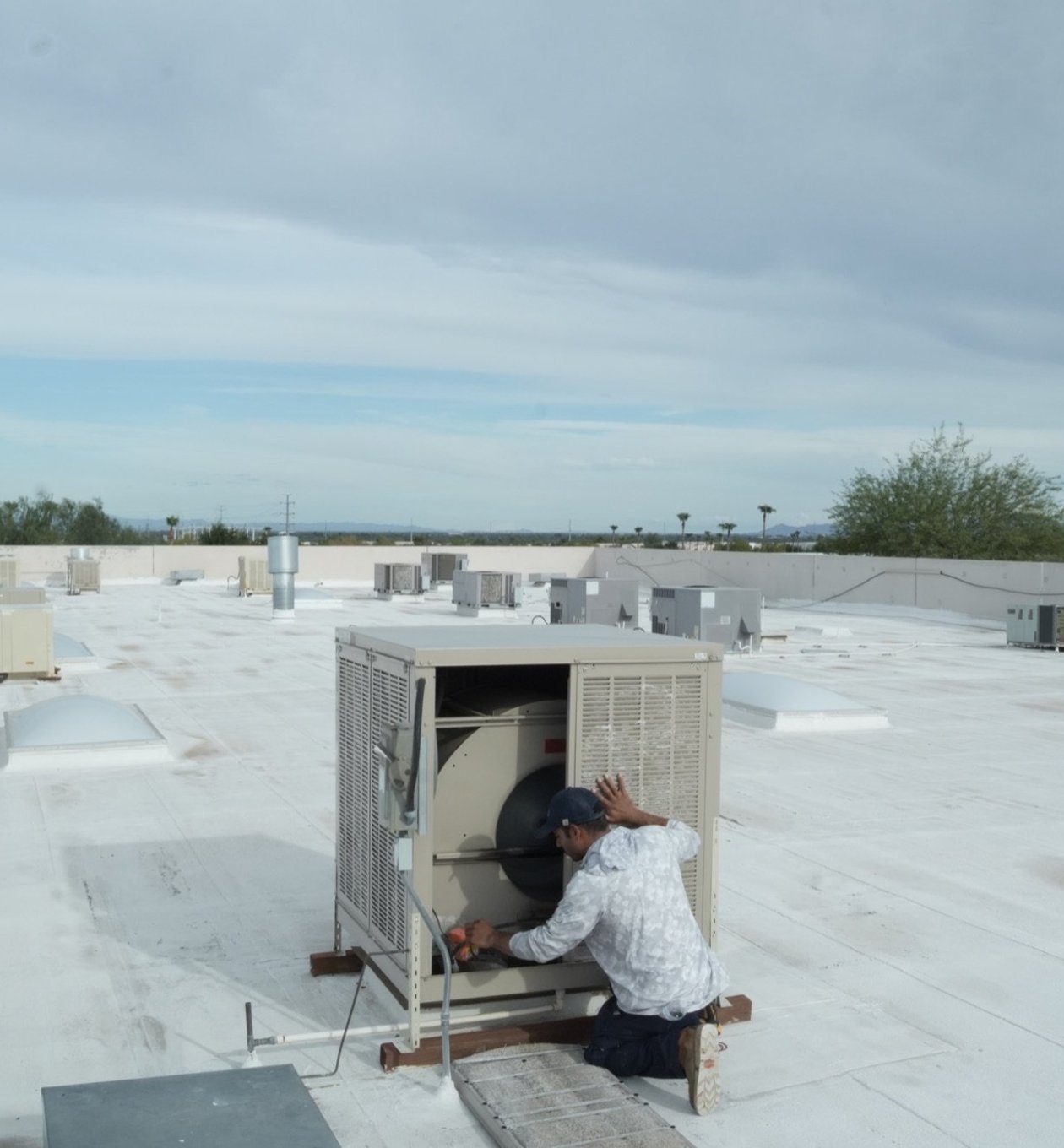
Swamp Coolers Run on a Calendar, and They Are Not Right for Every Room
Refrigerated equipment mostly sits there year round. A swamp cooler does not. Water goes into it in the spring and comes out of it in the autumn, and both are real jobs with real consequences when skipped. Most contractors treat changeover as a nuisance call and it shows. We schedule it the way maintenance visits get scheduled, so it happens before the weather forces it rather than during the first week nobody can get a technician. We are also willing to tell you when evaporative cooling is the wrong tool for a space.
Spring Startup, Before the First Hot Week: Summerization is more than turning the water back on. The cooler comes apart: old pads out, sump scraped and flushed, spider lines cleared, pump cleaned or replaced, float set, bleed off confirmed, water line opened and every joint watched under pressure. Then the air side, with belt, bearings, motor amps and blower wheel checked before the unit runs loaded. Startup is the honest moment to find rusted pans and dead pumps, while there is time to order parts. A cooler started in a rush in May gets the fast version of all this, and the fast version fails in July.
Fall Shutdown and Winterization: Water left in a cooler over winter is how pumps seize, sumps corrode and supply lines split. Shutdown means the water supply valved off, the line drained or blown out, the sump emptied and dried, the pump cleared, and the unit covered so the cabinet is not taking weather with a damp interior. Just as important, the duct opening gets closed off. An uncovered cooler is a hole in your building all winter, pulling conditioned air out and cold air in, which shows up on a heating bill nobody connects to the cooler on the roof.
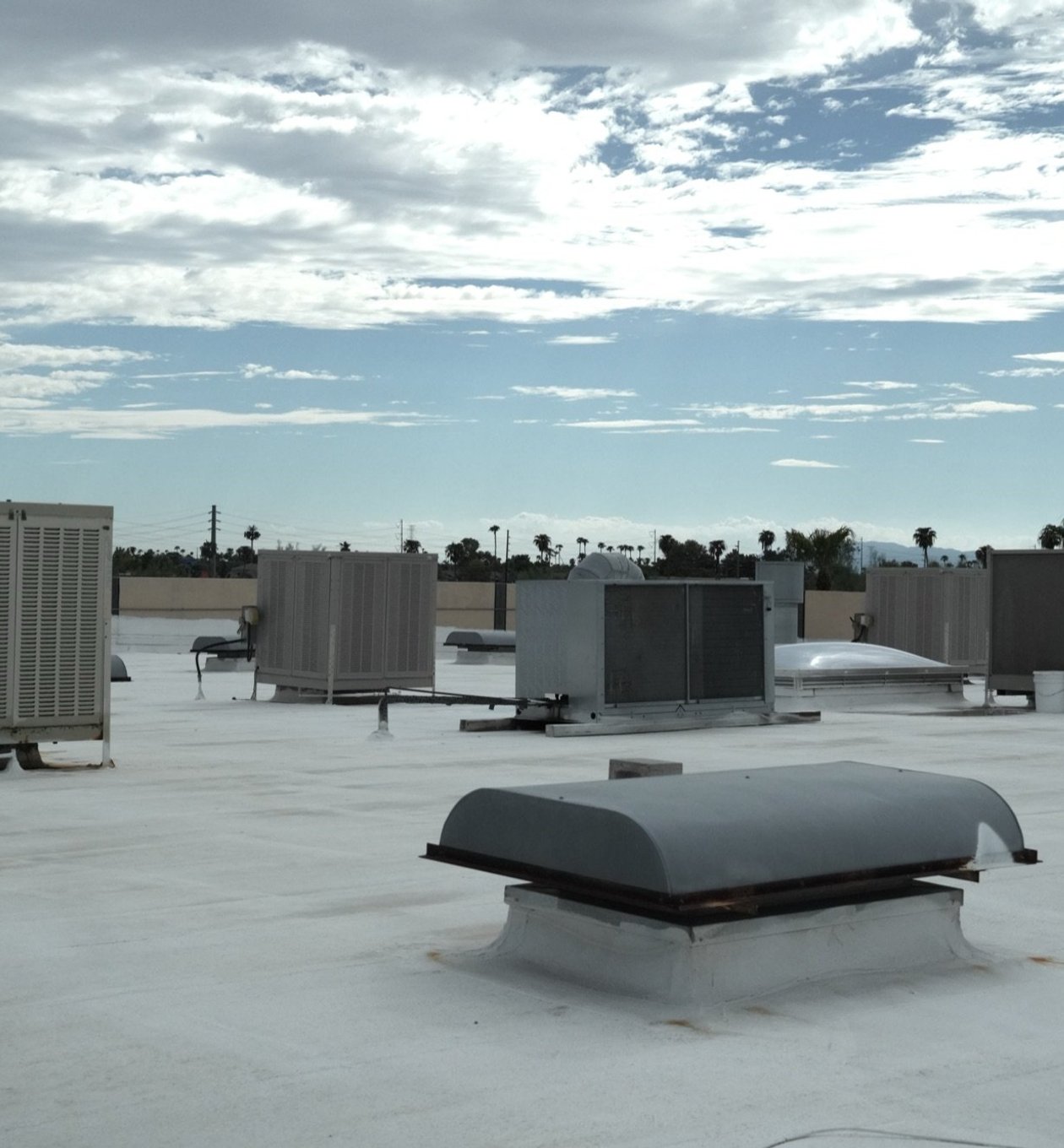
Where a Swamp Cooler Is Genuinely the Right Answer: Big volume, high ceilings, doors that open, and people who need moving air rather than a sealed and tightly controlled envelope. Warehouses, distribution centers, manufacturing floors, open workshops, shop bays, dock areas and covered patios. Evaporative cooling suits these because it changes the air out rather than recirculating it, and refrigerating that much constantly replaced air is not a serious proposal. If your building is part open floor and part finished office, the two halves need different equipment on one schedule, which is covered on our warehouse and industrial HVAC page.
Where It Is Not, and We Will Say So: Evaporative cooling works by putting water into the air, so it needs dry air and it adds humidity to the space. During monsoon weeks the outside air already carries moisture, less water evaporates off the pads, and the air coming out is simply not as cool. Maintenance does not fix that, and anyone who says otherwise is selling. It also rules out rooms where moisture is a problem: server and network rooms, paper, packaging, electronics and finishes. For those we recommend refrigerated cooling in that zone rather than pretending a cooler can carry it.
Commercial Swamp Cooler Questions
At minimum, twice a year: a spring startup and a fall shutdown. Most commercial coolers benefit from at least one check in between, during the season, because pads, water lines and belts all change condition while the unit is running loaded. How hard your water is, how much dust the site throws and how many hours the cooler runs all move that number. A cooler on a dusty yard running long shifts needs looking at more often than one over a patio. We set the interval after we have seen the equipment, and we put it in writing.
Usually water, not the motor. If the blower is turning and air is moving, the common causes are pads that are not fully wet, a pump that has lost pressure or seized, spider lines blocked with mineral, a float set too low, or pads so scaled that air slips past instead of through. Air side causes come next: a glazed belt slipping, a dusty blower wheel, or a damper or duct closed off. Less obvious, the building may have nowhere to exhaust the air to, so nothing actually moves across the floor. All of it is diagnosable on site in one visit.
Because a swamp cooler evaporates pure water and leaves every mineral behind in the sump. The water remaining gets harder the longer the unit runs, so scale builds on the pads, sludge collects in the reservoir, spider lines block and the pump wears out early. The defence is the bleed off line, a small continuous drain that carries mineral heavy water away so incoming fresh water dilutes what is left. It is routinely capped off by somebody who thinks it is a leak. Keeping it open, keeping the sump clean and replacing media before it turns to rock is most of the battle.
The unit comes apart rather than just getting switched on. Old pads or media out and new installed, sump scraped and flushed, spider lines and distribution header cleared, pump cleaned or replaced, float valve set to the correct level, bleed off line confirmed open and flowing, then the water supply opened and every joint watched under pressure. On the air side we check belt tension and condition, pulley alignment, bearings, motor amperage against the data plate and the blower wheel. We also look at the cabinet, panels and roof curb while the panels are off, because that is the cheap time to find rust.
Yes, and skipping it is expensive in a quiet way. Water left sitting over the winter seizes pumps, corrodes the sump and can split a supply line. Shutdown means valving off the water, draining or blowing out the line, emptying and drying the sump, clearing the pump and covering the unit so the cabinet is not taking weather. The duct opening gets closed off as well. An uncovered cooler is an open hole in the building envelope all winter, pulling heated air out and cold air in, which shows up on a heating bill nobody connects to the cooler.
It depends on the space, and often the honest answer is both. Evaporative cooling is the right tool for high volume areas with air moving through them: warehouse floors, manufacturing, shop bays, dock areas, open workshops and patios. It struggles during monsoon weeks, because it needs dry air to work with, and it adds moisture to the room. So any zone that cannot tolerate humidity or a few uncomfortable weeks, including server rooms, sensitive storage, and finished offices with people at desks, is a case for refrigerated cooling in that zone only. We will tell you which is which after walking the building.