


 info@due-all.com
 Open 24/7



Swamp Cooler Repair & Service in the East Valley
A swamp cooler is a simple machine, which is why it gets ignored until the house stops cooling. Due-All Air Conditioning & Heating repairs evaporative coolers and handles the spring startup and winter shutdown for homes across Queen Creek, Gilbert, Phoenix and the surrounding East Valley communities.
Call Now: (480) 988-0070

Keeping East Valley homes comfortable since 1989.
Schedule Swamp Cooler Service
Tell us where your cooler sits and what it is doing, and we'll get back to you to schedule a visit.

What We Check and Fix on a Swamp Cooler
Pads, Pump and Water Lines: The pads are where the cooling happens. We check that they wet evenly, clear the small lines that spread water across them, clean the pan, test the pump and set the float so the cooler neither runs dry nor overflows onto the roof.
Belt, Motor and Blower: A slipping belt or a dusty blower wheel quietly cuts how much air reaches the house. We check the belt, pulleys, bearings and motor, and clean the blower so the cooler moves the air it was built to move.
Local Since 1989: A Queen Creek company that has kept East Valley homes comfortable since 1989, with a 4.9 rating on Google from our customers.

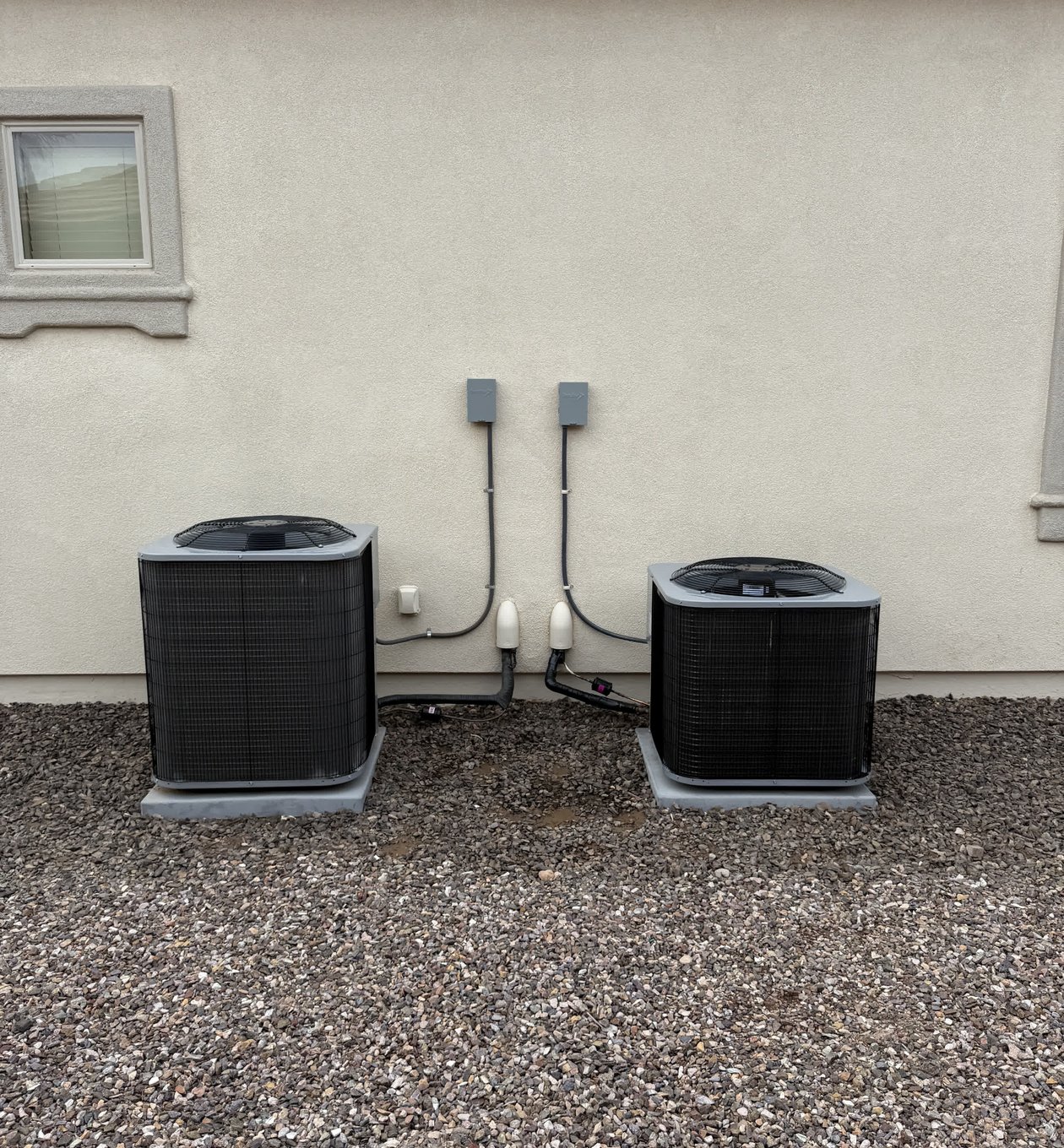
A Swamp Cooler Runs on a Calendar
Spring Startup: More than turning the water back on. Old pads come out, the pan gets cleaned, the lines and pump are cleared, the float is set and every water connection is checked for leaks before the cooler has to run all day.
Winter Shutdown: The water is turned off and drained, the pan is emptied and dried, and the cooler is covered so the duct opening is closed. Skipping it can mean a seized pump in spring and warm air leaking out of the house all winter.
Arizona Hard Water: A cooler leaves minerals behind as the water evaporates, and that scale clogs pads, lines and pumps. Keeping the bleed off line open and the pan clean is how a cooler lasts more than a few seasons.
Frequently Asked Questions About Swamp Coolers
Before the first hot week, not during it. In the East Valley that usually means spring, once nights stay warm enough that the house wants cooling. Starting early gives time to replace pads, a pump or a float before you need the cooler every day.
Yes. Water left in the cooler over the winter can seize the pump, rust the pan and split the supply line on a cold night. Shutdown means turning off and draining the water, emptying and drying the pan, and covering the cooler so the duct opening is closed. An open cooler lets heated air out of the house all winter.
It depends on your water, how much the cooler runs and the type of pad. Arizona water is hard, so pads collect mineral scale and dust. When they look crusty, smell musty or stay dry in spots, they are not cooling the air well and it is time for new ones. Most homeowners have them checked at every spring startup.
Usually it is the water side: pads that are not fully wet, a pump that has stopped, blocked distribution lines or a float set too low. It can also be a slipping belt, a dusty blower or a house with no window open for the air to leave through. During monsoon humidity a cooler also simply cools less. We find the cause before recommending any fix.
Yes. Plenty of East Valley homes have both, often a cooler for the garage, workshop or patio and refrigerated air for the house. We service both, and we can check them on the same visit.
Yes. Warehouses, shops and other commercial buildings are covered on our commercial swamp cooler page.