


 info@due-all.com
 Open 24/7

Commercial HVAC Maintenance in Queen Creek & the East Valley
Due-All maintains commercial HVAC equipment across Queen Creek, Gilbert, Mesa, Chandler, San Tan Valley and the rest of the East Valley. Office buildings, retail and restaurant spaces, multi-family and HOA properties, warehouses, medical suites, churches and schools. We work on a quarterly agreement with a written scope and a fixed per-unit price, set after we walk your building and inventory the equipment. Priority dispatch is included in every agreement. Whether you run one building or a portfolio, you get one number to call and a written report after every visit.


Serving the East Valley since 1989. BBB A+ accredited since 2001. ROC #140358, licensed, bonded and insured.
Six Answers for Commercial
Buildings in the East Valley
Commercial HVAC decisions rarely start with the equipment. They start with a budget line, a lease clause, a tenant complaint or a unit that has already quit. Each page below takes one of those on directly. Pick the one that matches the conversation you are having.
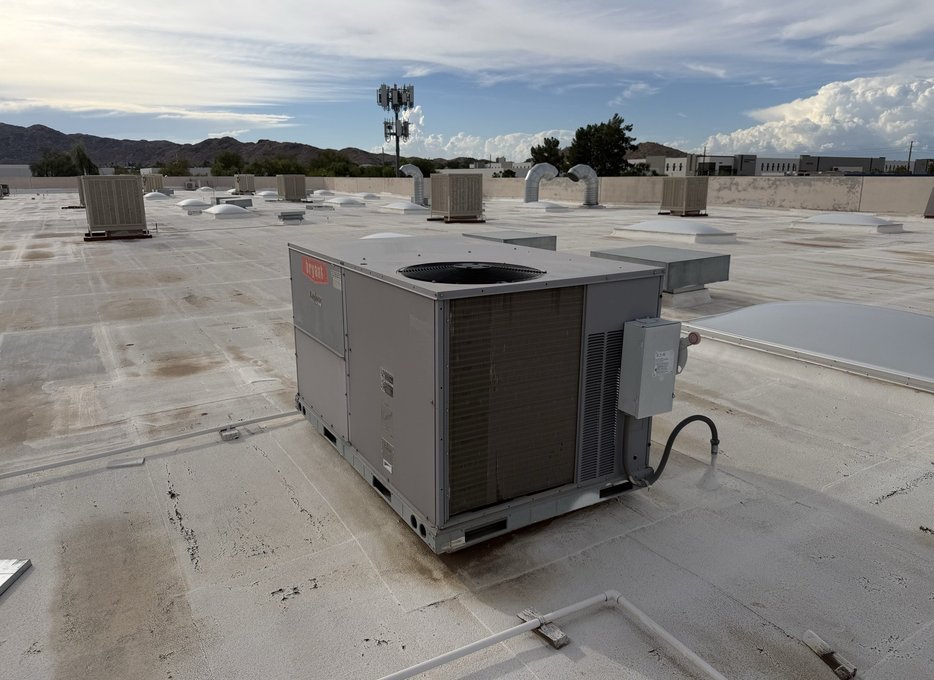
What Commercial HVAC Maintenance Costs
For the person who has to put a number in a budget before the meeting and wants to know how commercial maintenance is actually priced.
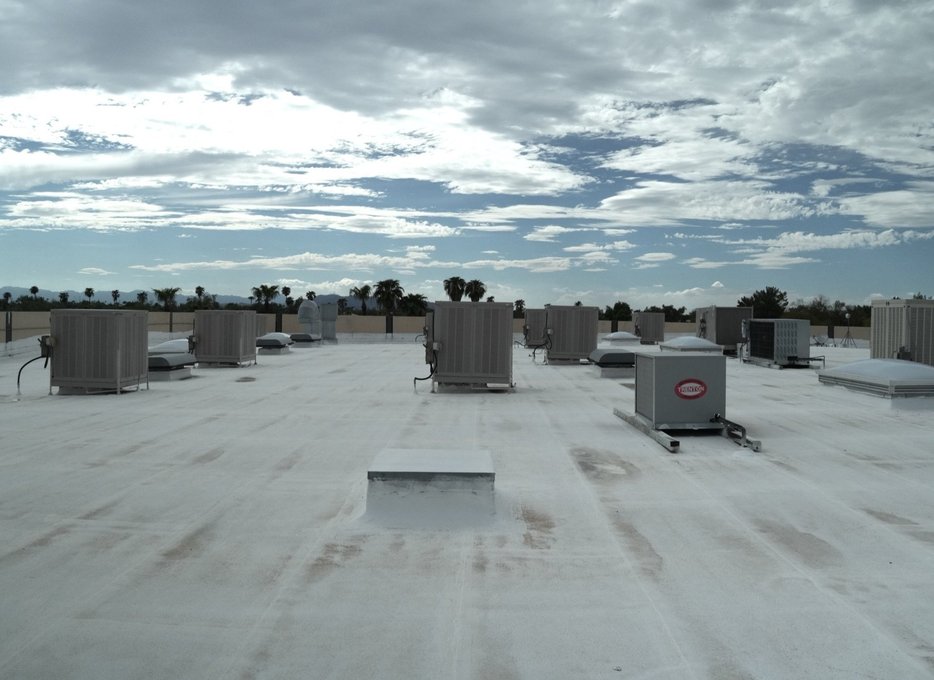
Who Pays for HVAC in an Arizona Commercial Lease
For tenants and landlords looking at the same invoice and reading the lease differently, with the maintenance and replacement line explained.
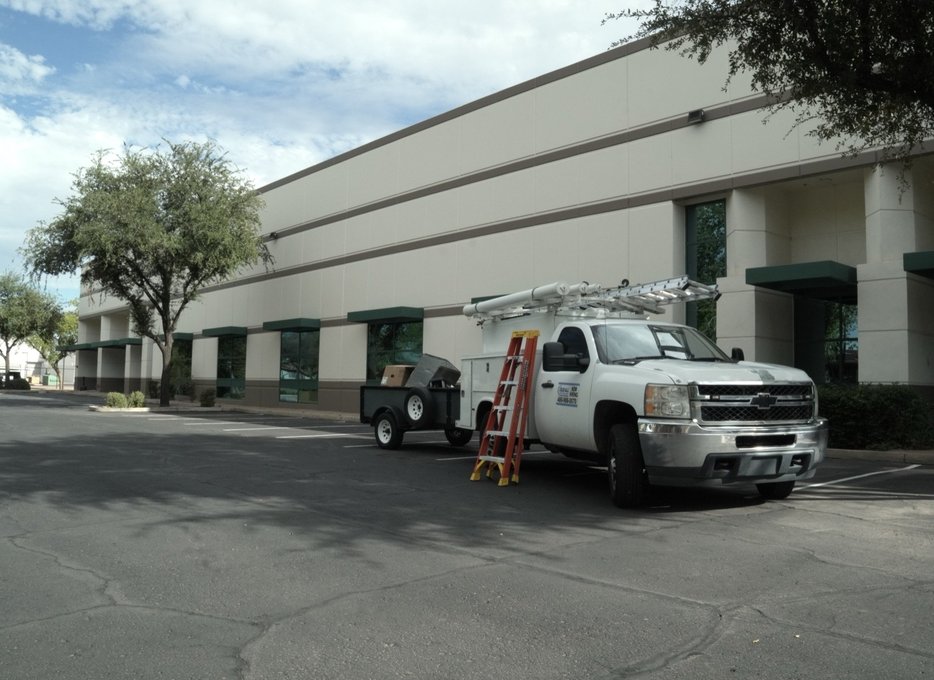
For Property Managers
For the manager running a portfolio who needs one point of contact, one schedule across every address, and reports that close a ticket.
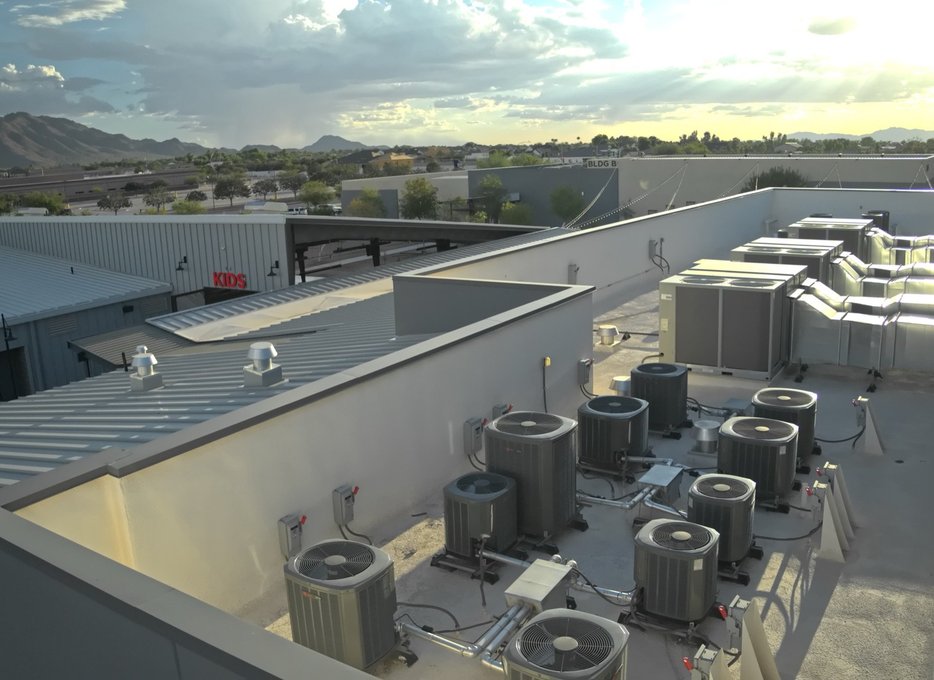
For Building Owners and Landlords
For the owner carrying the capital equipment, who needs the asset protected, the warranty documented, and replacements planned rather than forced.
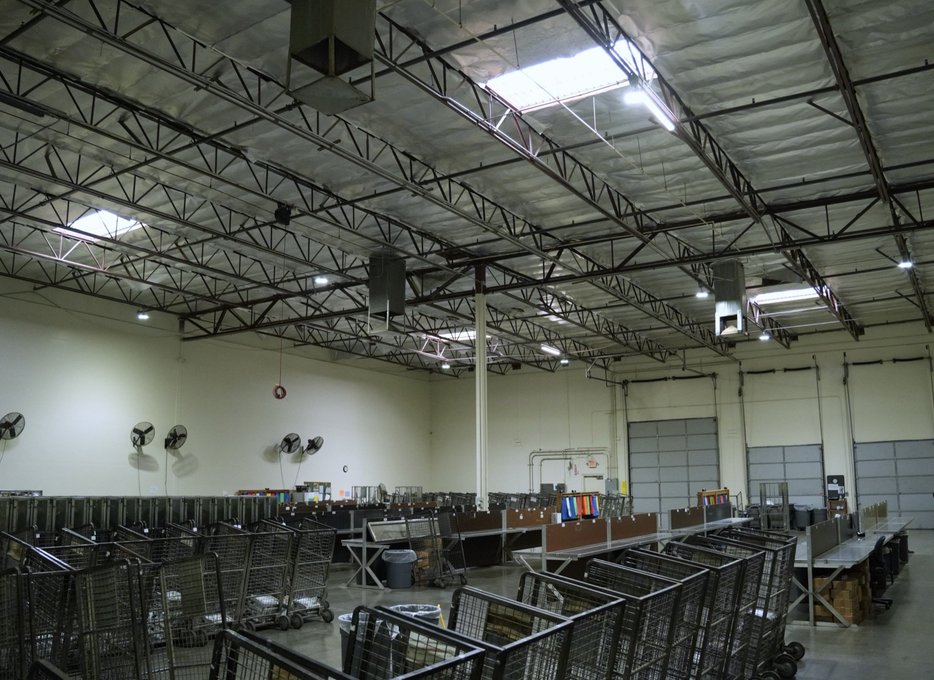
Warehouse and Industrial Buildings
For buildings that are part conditioned office and part open floor, where the two halves need different equipment on a single schedule.
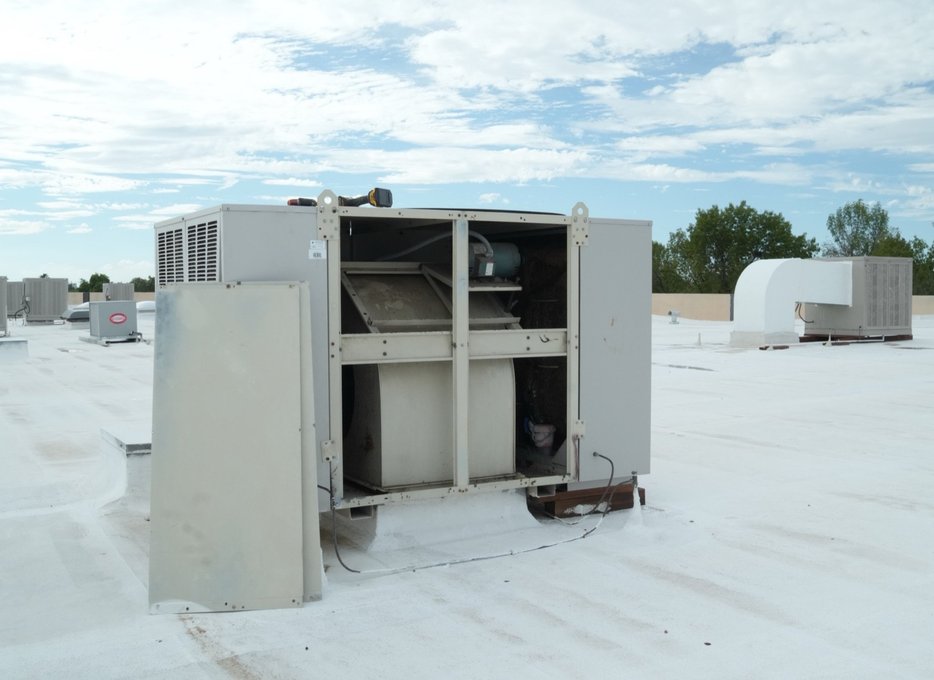
Commercial Swamp Cooler Repair
For evaporative cooling on warehouse floors, shop bays and dock areas, including pads, pumps, water lines and seasonal changeover.
What a Commercial Maintenance Agreement Includes
An agreement is not a discount card. It is a schedule, a scope and a paper trail. Below is what we cover on every unit we put under contract, plainly enough that you can hold another contractor's proposal next to it and see what is missing.
Quarterly Inspections, Structured Two and Two: Four visits a year, but not four identical ones. Two comprehensive visits land before cooling season and before heating season. The two lighter visits in between catch small faults while they are still small.
Filters on Their Own 30 to 60 Day Cycle: We suggest filters be changed on their own schedule of between a 30 to 60 day cycle rather than only during quarterly services, because Arizona dust loads a filter far faster than a schedule written for a temperate climate assumes, and a choked filter drops capacity, raises amp draw and eventually freezes a coil. The cycle is set per building.
Belt, Coil and Drain Service: Belts inspected, tensioned or replaced, with sheave alignment checked. Evaporator and condenser coils cleaned, because a dust blinded condenser in July is the most common reason a healthy unit stops holding temperature. Condensate pans and drain lines flushed and the safety switch tested, the failure that becomes a ceiling stain.
Refrigerant Charge and Electrical: Charge verified and the system leak checked, with superheat and subcooling recorded rather than eyeballed. Contactors, capacitors and connections inspected, and amp draw read against the nameplate. Supply and return temperature split logged per unit, so performance is tracked visit over visit.
A Written Report After Every Visit: Per unit: what was inspected, what was cleaned or replaced, the readings we took, the condition we found it in, and photos. Anything needing repair is listed separately, so it arrives as a decision rather than a surprise.

Four Steps From First Call to a Signed Agreement
Nobody in this market prices commercial maintenance off a chart, and they are right not to. You cannot price equipment you have not seen. So the front of this process is a visit, not a quote.
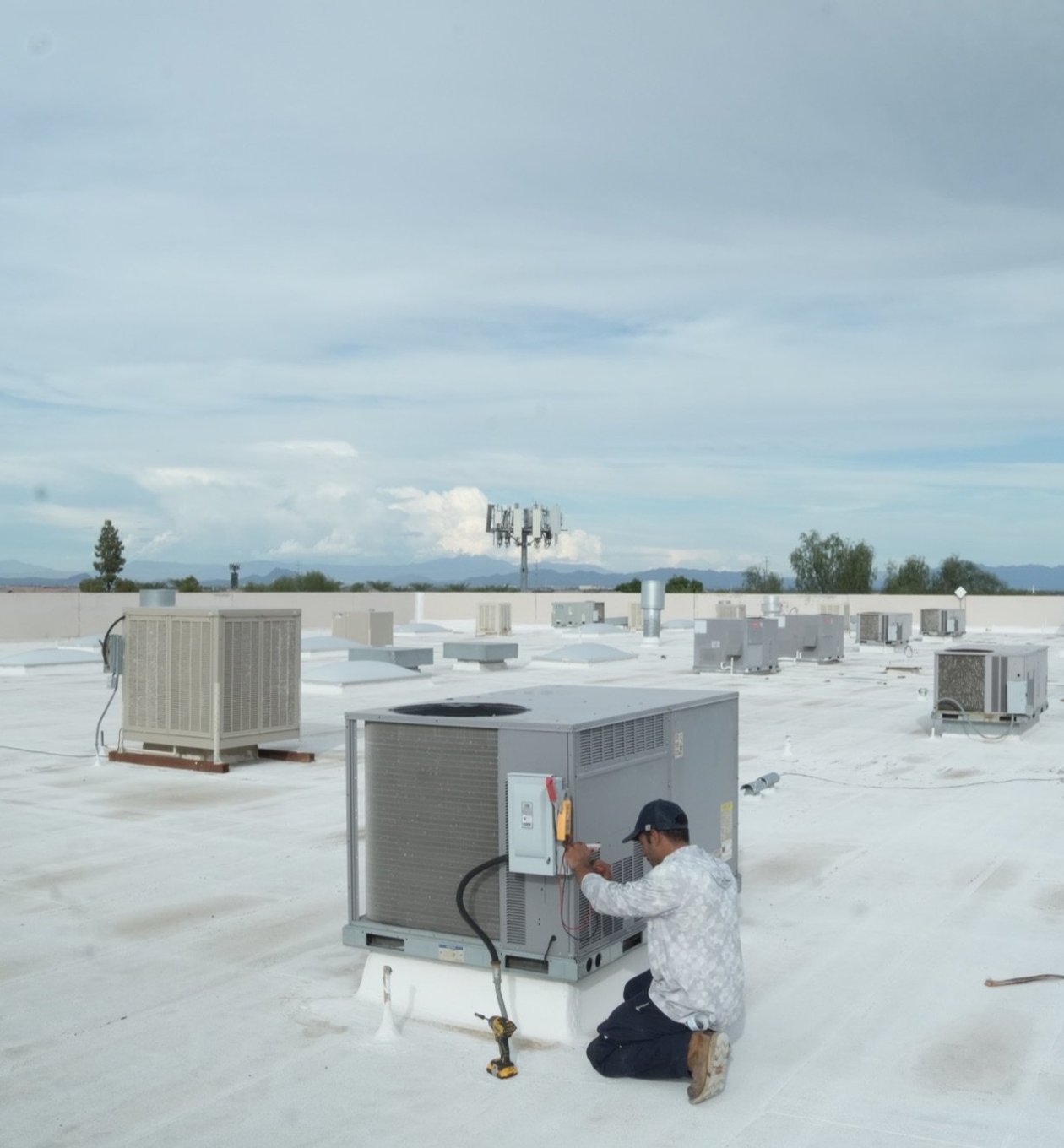
- Site Walk and Equipment Inventory We get on the roof and record every unit: make, model, serial, tonnage, age, filter sizes, refrigerant type and condition. You hear what we found, including anything already failing, before anyone talks about money.
- Written Scope and Fixed Per-Unit Price The scope comes back in writing, unit by unit, with a fixed price per unit that follows from the inventory. You can forward it to an owner or a board and it reads as a document rather than a pitch.
- Scheduled Visits and Reports Visits go on the calendar for the year, with filters on their own suggested 30 to 60 day cycle alongside them. Each visit produces a written report per unit, with photos and readings, sent when the work is finished.
- Annual Capital Review Once a year we go through the service history and tell you which units are fine, which are on borrowed time and which are worth replacing before they pick their own date to fail.
Buildings We Maintain
Commercial HVAC is not one job. A restaurant fighting its own kitchen exhaust, a medical suite that has to hold humidity, and a warehouse running evaporative cooling on the floor are three different problems that happen to share a trade. These are the buildings we are on most weeks.
Office and Flex: Package units and split systems serving people at desks, where a warm conference room becomes a complaint before lunch. Thermostat schedules, zoning and after hours setbacks are the easy wins.
Retail and Restaurant: Long hours, heavy internal load, and kitchen exhaust pulling air out faster than anything puts it back. Makeup air, greasy dust on condensers, and visits scheduled around trading hours.
Multi-Family and HOA: Apartments, condominiums and association owned common areas, where the work happens in occupied units and has to finish without generating a wave of resident complaints. Due-All has worked apartment communities for years.
Industrial and Warehouse: Part conditioned office, part open floor, and often refrigerated cooling on one side of a wall with evaporative cooling on the other. Two systems, one schedule.
Medical and Dental: Filtration, ventilation and humidity that have to hold steady, in a building where a unit down is a cancelled day of appointments. Documented maintenance counts for more here than anywhere.
Churches and Schools: Large volumes worked hard for a few hours and then left empty, usually on a tight budget with an older mechanical room. The money is in catching a failure during a break rather than during a service.
Recent Commercial Work
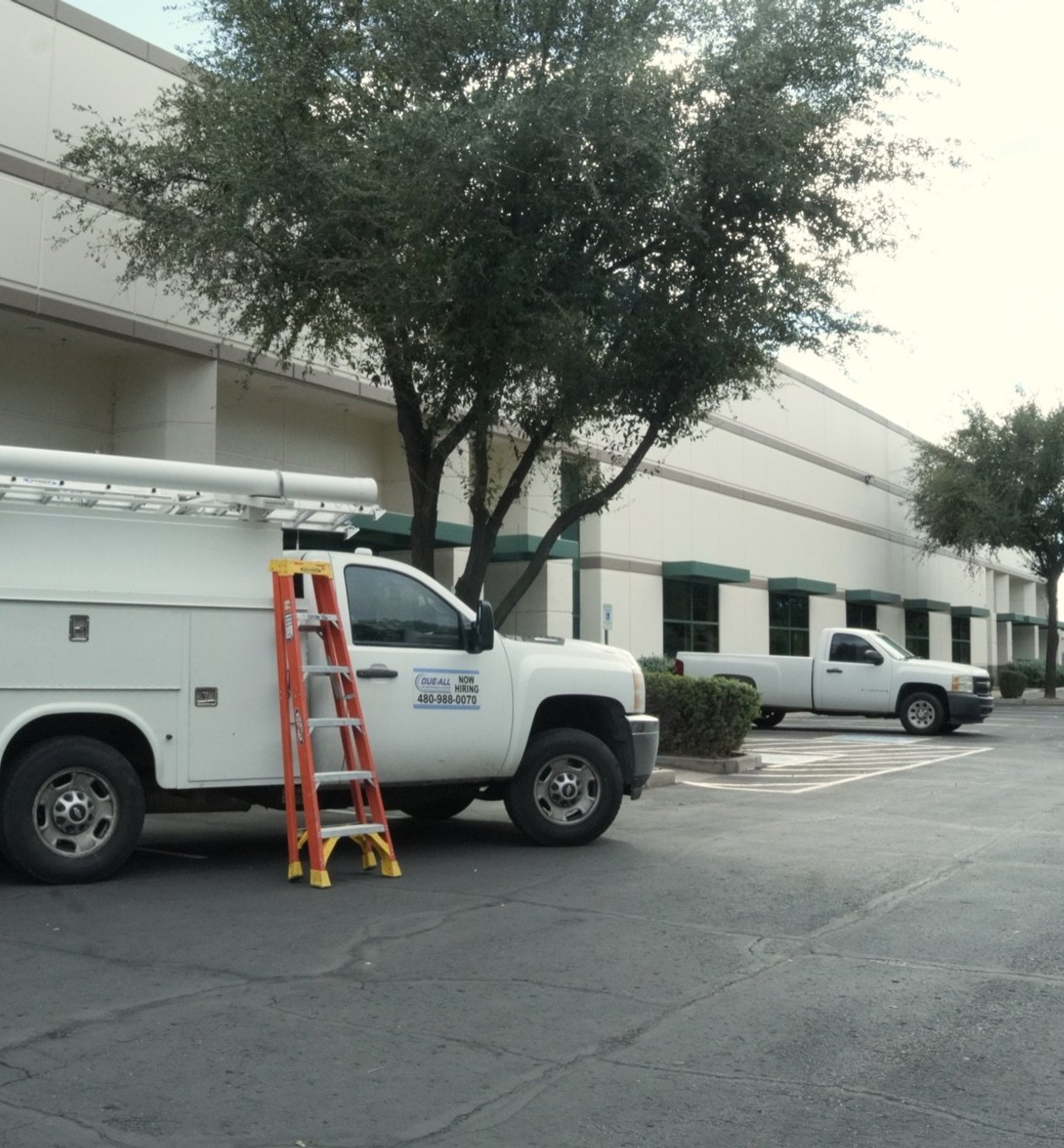
Real Due-All crews on real East Valley commercial roofs: package units, split systems, air handlers and swamp coolers, the equipment we inspect and service every week.


Commercial Maintenance Questions
We do not publish a price, and neither does anybody else in this market, because there is no honest way to price equipment nobody has looked at. What we do instead is quote a fixed price per unit after a site walk and equipment inventory, so the number is tied to what is actually on your roof: how many units, what size, how old, how hard they are to reach, and what condition we found them in. That price goes in writing before the first visit.
Quarterly, structured as two comprehensive visits and two lighter intermediate visits rather than four identical ones. The comprehensive visits land before cooling season and before heating season. We suggest filters be changed on their own schedule of between a 30 to 60 day cycle rather than only during quarterly services, because Arizona dust loads a filter far faster than a schedule written for a temperate climate assumes. ANSI/ASHRAE/ACCA Standard 180 allows a documented, climate driven adjustment to service intervals. Your building's interval gets set during the site walk and written into the agreement.
It depends on your lease, and anybody who answers that faster has not read one. The common pattern in Arizona commercial leases is that the tenant carries routine maintenance on the equipment serving their space while the landlord carries capital repair and replacement, but the wording varies and so does where the line between a repair and a replacement sits. We work both sides of it, often in the same building. Settle the wording before a compressor decides it for you.
More often than owners expect. Install quality on new construction varies a great deal, and we regularly find charge, airflow and drainage problems on equipment barely a year old. New equipment also sits in the same dust as old equipment, and a new condenser blinds just as fast. The other reason is the warranty: most manufacturers require documented maintenance, and a claim is a much shorter conversation when you can produce a service record. Starting while the equipment is new is the cheapest time to start.
You call us and you go to the front of the line. Priority dispatch is included in every agreement at no extra charge. After-hours emergency calls are not part of the agreement and are billed at an after-hours rate. Priority dispatch is also faster on our end, because by then we know your equipment: the model and serial numbers are on file, we know how to get on the roof, and we know what failed last time. Repairs outside the agreement get quoted on their own rather than folded into the maintenance invoice.
Several. A handful of property management companies already keep us busy year round, and a portfolio runs the same way a single building does, just wider: one point of contact, one schedule covering every address, per property scope written out, and reports your team can attach to a work order and close a ticket with. Properties get added or removed as the portfolio changes without renegotiating the whole agreement. Billing follows whatever your office already does.