info@due-all.com
 Open 24/7





Most HVAC advice you find online is written for places with four real seasons, where the air conditioner runs a few months a year and the furnace does the heavy lifting. The East Valley is the opposite. Here the cooling system carries the load for most of the year, and the heating side gets a light workout on winter mornings. That changes how you should think about maintenance.
The short answer
For most homes in Queen Creek, San Tan Valley, Gilbert, Mesa and the surrounding area:
- Air conditioning: have it serviced at least once a year, in spring before the heat sets in. Many homeowners here add a second visit in fall, after the system has worked through the summer.
- Heat pump: because a heat pump both cools and heats, it runs nearly year round. Twice a year, spring and fall, is a sensible schedule.
- Gas furnace: once a year, in fall, before you need heat on the first cold morning.
- Air filter: check it every month. In a dusty desert climate, and in homes with pets, filters often need changing more often than the package suggests.
Your system's age, how hard it works, and the manufacturer's recommendations all matter, so treat this as a starting point rather than a rule.
Why the desert is hard on HVAC equipment
Three things make the East Valley tougher on equipment than milder climates.
Run time. An AC in the Phoenix area can run for long stretches every day for months at a time. More hours means more wear on the compressor, fan motors, capacitors and contactors.
Heat on the outdoor unit. The condenser sits outside in direct sun, often on a pad next to a block wall that radiates heat back at it. It has to reject heat from the house into air that is already very hot, which pushes the system hard.
Dust. Fine dust, monsoon storms and blowing debris coat outdoor coils and clog filters. A dirty coil cannot shed heat well, so the system runs longer and works harder to deliver the same cooling.
Regular service does not make any of this go away, but it catches the small problems these conditions create before they turn into a no-cool call in July.
What an AC or heat pump tune-up should cover
A real tune-up is more than a quick look and a sticker on the unit. Here is what a thorough visit typically includes:
- Thermostat check: confirming it reads the temperature correctly and calls for cooling and heating the way it should.
- Electrical components: inspecting wiring, tightening connections, and testing capacitors and contactors, which are some of the most common failure points in hot weather.
- Refrigerant performance: checking that the system is operating within the manufacturer's range, and looking for signs of a leak.
- Outdoor coil: inspecting and cleaning the condenser coil so it can release heat properly.
- Indoor coil and drain: checking the evaporator coil, the drain pan and the condensate line, and clearing the line so it does not back up and leak.
- Motors and fans: checking the outdoor fan and indoor blower for wear, noise and proper operation.
- Airflow and filter: checking the filter and overall airflow, since restricted airflow causes a long list of other problems.
- Heat pump extras: on a heat pump, confirming the system switches cleanly between cooling and heating, and that the defrost function and backup heat work.
At the end, you should get a clear explanation of what was found, including anything worth keeping an eye on. Good maintenance is as much about information as it is about cleaning.
What a furnace check should cover
If your home has a gas furnace paired with an AC, the heating side needs attention too, even if it only runs a few weeks a year. A furnace inspection generally covers the burners and ignition, the flame sensor, the heat exchanger, the venting, the safety controls, and the blower. Because a gas appliance involves combustion and venting, this is not a part of the system to skip just because it sees light use.
Signs you should not wait for the next scheduled visit
Even with a maintenance plan, call for service if you notice:
- Warm air from the vents, or the house not reaching the thermostat setting
- The system turning on and off every few minutes
- New grinding, squealing or buzzing sounds
- Ice on the refrigerant lines
- Water around the indoor unit or a stain on the ceiling below it
- A burning smell when the system starts
We cover these in more detail in 8 signs your AC needs repair before the Arizona summer.
What you can do between visits
A few simple habits make a real difference:
- Change the filter on schedule, and write the date on it.
- Keep two feet or so of clear space around the outdoor unit. Trim shrubs and do not stack anything against it.
- Gently rinse loose dust off the outdoor coil with a garden hose, with the power off. Avoid a pressure washer, which can bend the fins.
- Keep supply vents and return grilles open and unblocked.
- Pay attention to how the system sounds and how long it runs, so you notice when something changes.
When maintenance turns into a bigger conversation
Sometimes a tune-up turns up a system that is near the end of its life: an old unit that has needed repeated repairs, one that struggles to keep up on the hottest days, or one that uses a refrigerant that is being phased out. In that case it makes sense to talk through AC replacement or heat pump replacement on your own schedule, rather than in the middle of a summer breakdown.
Schedule your next service
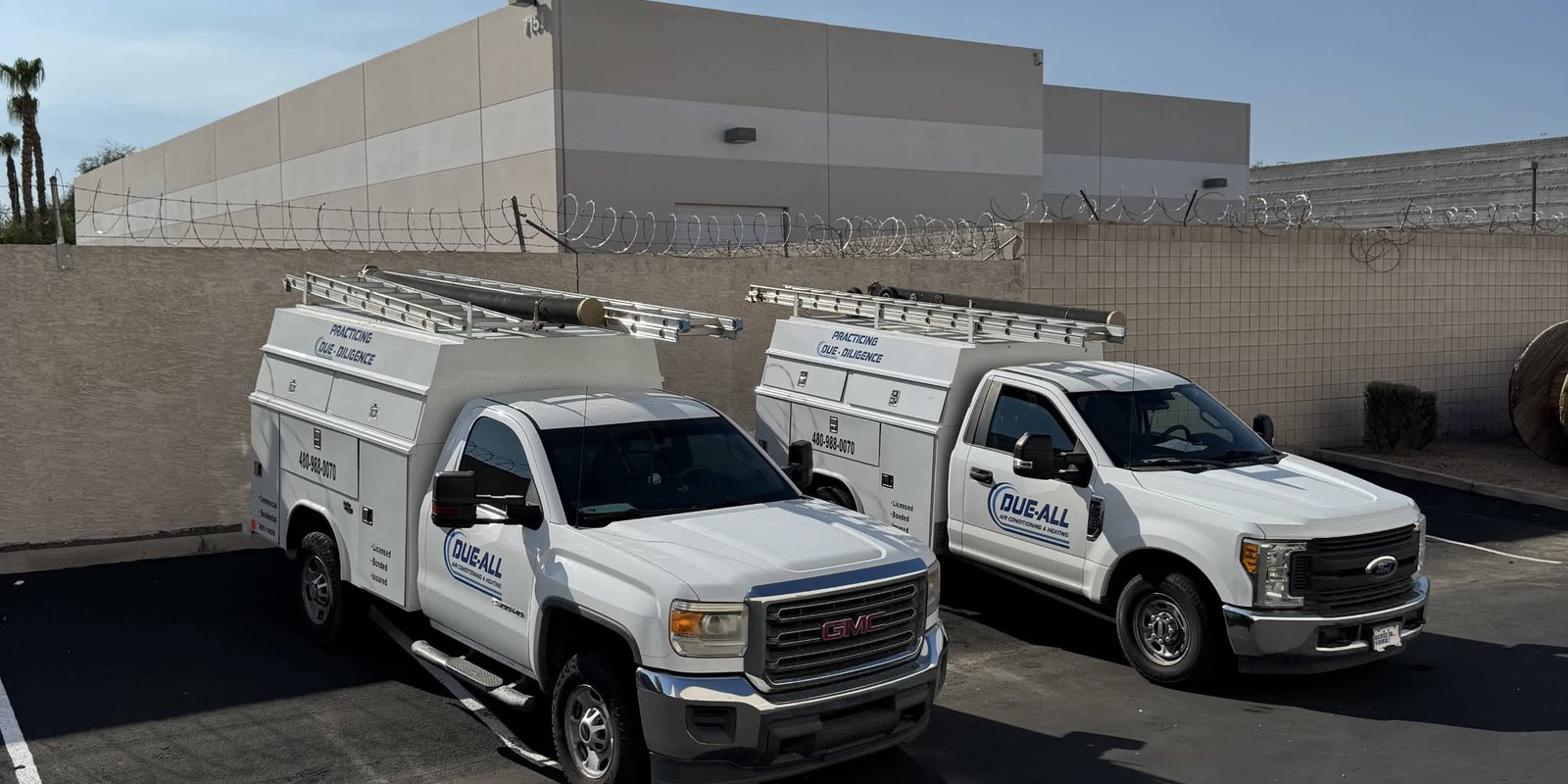
Due-All Air Conditioning & Heating is based in Queen Creek and works with homeowners throughout the East Valley. To schedule maintenance or have a system checked, call 480-988-0070 or contact us online. If something is already not working right, see our AC repair and heat pump repair services.